
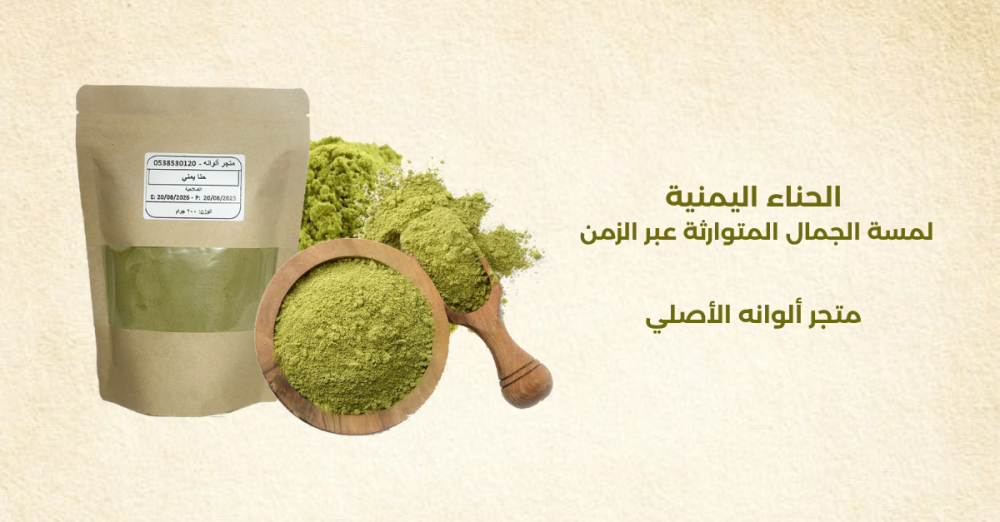
Yemeni henna is not merely a natural cosmetic; it is a rich cultural heritage embodying beauty and traditions passed down through generations with pride and cherish. In Yemen, henna is used in various ways, including adorning hands and feet with artistic designs inspired by folklore, adding a touch of elegance and joy to special occasions. Furthermore, Yemeni henna is used on the hair, nourishing it and giving it a natural, lustrous color. It also protects the scalp from dandruff and contributes to strengthening hair follicles and preventing hair loss. The benefits of henna are not limited to hair and skin; they extend to improving nail health and treating certain skin conditions such as inflammation and cracks. Thus, authentic Yemeni henna represents a time-honored aesthetic touch that combines natural care with traditional art, making it one of the most authentic and appealing beauty products in the region.
Yemeni henna for hair and skin offers countless health and beauty benefits.
Yemeni henna is considered one of the most beautiful and oldest natural treatments for hair and skin, combining countless health and beauty benefits.
These benefits make authentic Yemeni henna a preferred natural choice for those seeking healthy and authentic beauty, imbued with the essence of heritage and the spirit of nature.
Benefits of Yemeni henna for hair:
- Yemeni henna for hair improves scalp health and reduces dandruff, itching and fungal infections.
- Enhance natural hair color and reduce the appearance of premature graying.
- Resisting oxidative stress that causes hair loss and breakage.
- It moisturizes and softens hair thanks to its vitamin E content.
- Strengthening hair, increasing its elasticity, and preventing split ends.
- Regulating oil secretion in the scalp, especially for oily hair.
- Stimulates hair growth by promoting the health of its follicles.
Benefits of Yemeni henna for the skin:
- Original Yemeni henna for moisturizing and nourishing the skin naturally and safely.
- Yemeni henna helps protect the skin from inflammation and cracks.
- Treating some skin conditions such as allergies and minor skin infections.
- Improving the texture of the skin and making it smoother and more vibrant.
- It is used in hand and foot engraving as a traditional art that enhances beauty and joy on occasions.
- Strengthening nails and protecting them from breakage.
Traditional Yemeni henna rituals and decorations for weddings and special occasions
Traditional Yemeni henna rituals and decorations at weddings and other celebrations are an important part of Yemen's social and cultural heritage, held in high esteem. The festivities typically begin with "Henna Day," the day before the wedding, when women from the family and neighbors gather to apply henna to the bride and sometimes the groom. Beautiful designs and artistic patterns are drawn on the hands and feet by a skilled henna artist, known as a "henna artist," using authentic Yemeni henna. These rituals are accompanied by music, dancing, and ululations, creating a joyful and celebratory atmosphere.
In some regions, unique customs are preserved, such as applying henna to the palm of the groom's hand, without covering the entire palm, as a tradition imbued with special symbolism. The ceremony is usually accompanied by folk music and a traditional procession in which the bride wears national dress reflecting her region's heritage, while the groom wears traditional attire and carries a metal sword, a symbol of manhood and courage. These rituals are not merely for beautification; they carry spiritual and social significance, signifying a transition to a new life and strengthening family and tribal bonds with joy and celebration. In this way , Yemeni henna is considered a traditional art form befitting wedding occasions and reflecting the authenticity of Yemeni society and the beauty of its heritage.
How to make Yemeni henna for hair for unparalleled softness and thickness
To prepare Yemeni henna for hair in a traditional way that achieves distinctive softness and thickness, follow these steps:
- the components:
- Pure Yemeni henna powder for hair.
- Warm water (filtered or boiled and cooled).
- Olive oil or coconut oil (optional).
- How to make Yemeni henna for hair:
- In a glass or plastic bowl, mix Yemeni henna powder for hair Gradually add warm water until you get a firm dough, similar in consistency to yogurt.
- Olive oil or coconut oil can be added to enhance hydration and give shine.
- Leave the dough to ferment for 6-8 hours in a cool, dry place, ideally overnight.
- Applying authentic Yemeni henna:
- Distribute the henna on the hair, starting from the scalp to the ends, and cover the hair with a plastic cap.
- Leave the Yemeni henna on the hair for 2 to 4 hours depending on the desired color and density.
- Wash your hair with lukewarm water only, without using shampoo, immediately to preserve the color.
- Results:
- You will notice remarkable softness and density in the hair with a natural shine that reflects the hair's health and strength.
- With repeated use, the appearance of the hair improves and its density and strength increase thanks to the natural properties of henna in nourishing the scalp.
This traditional method is the secret to the beauty and softness of hair in Yemen and maintains its health without chemical damage.
Tips for choosing authentic Yemeni henna and ensuring quality results
- Buy Yemeni henna for hair from reliable sources: Make sure to purchase henna from well-known sellers or brands that specialize in Yemeni henna products to ensure the purity of the product and its freedom from chemicals, such as Yemeni henna from the original Alwan store.
- Note on color and smell: The color of henna powder should be pale green to olive, accompanied by a distinctive natural aromatic scent, without strong artificial or chemical fragrances.
- Powder consistency: Good henna is smooth and consistent without lumps or impurities, and it breaks down easily when added to water.
- Checking the ingredients: The best henna does not contain any chemical additives or artificial colors, but is 100% pure dried henna leaf powder.
- Simple test: Before full use, try a small amount on a small part of your hair or hand to ensure the color quality and the absence of sensitivity or irritation.
- Fermentation time: Genuine henna needs sufficient fermentation time (6-8 hours or more) to release its true dye, and this is an indicator of its quality.
- Avoid use with chemicals: Do not mix Henna should not be used with dyes or chemical hair straightening agents, as this affects the result and may lead to hair damage.
Following these tips will ensure you have a safe, natural experience with Yemeni henna that achieves shiny, natural, and healthy results for hair and skin, while preserving the heritage of authenticity and quality.